
Wondering what you can and can’t put in a portable storage container? It’s one of the first questions people ask when they’re planning a move, renovation, or simply need some extra space.
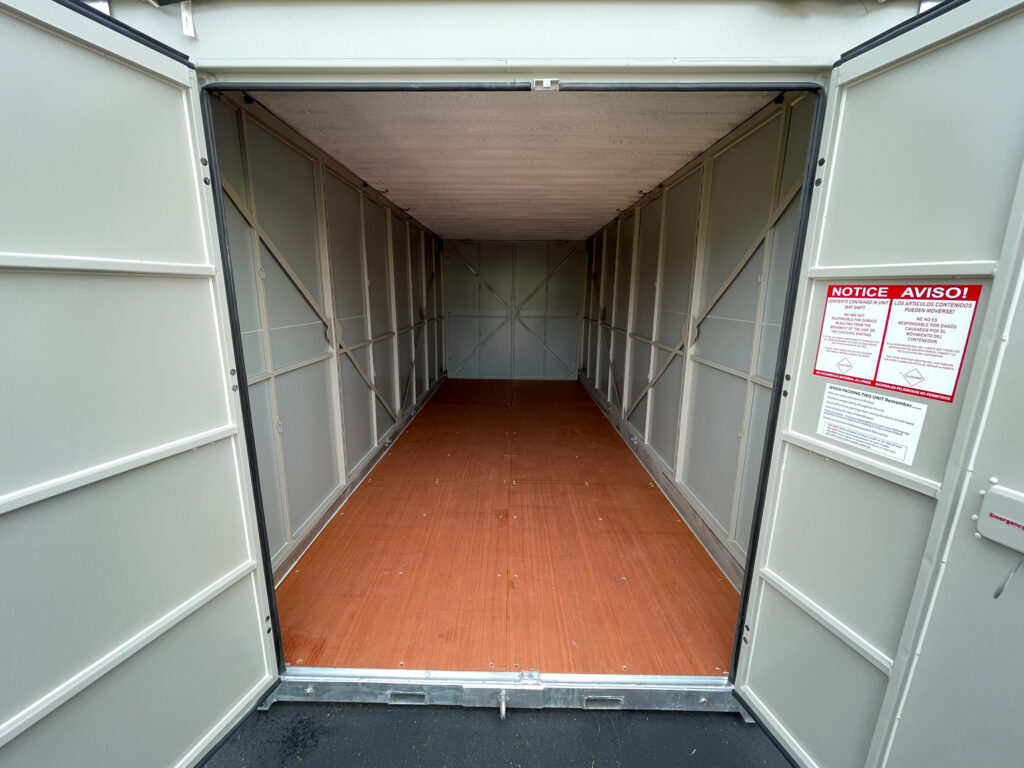
A portable storage container gives you the flexibility to pack and organize your belongings at your own pace, without having to rush the process. At Store Safe Storage, our portable containers are called STOBOX, and we deliver one straight to your driveway, making it easy to load everything from the comfort of your home.
Of course, having a container delivered to your driveway doesn’t mean you can put absolutely anything inside it. Some items are perfectly suited to portable storage, while others can’t be stored for safety or practical reasons.
In this guide, we’ll walk you through what you can and can’t put in your container, along with some simple tips for loading your belongings safely and preventing damage along the way.
7 Things You Can Store in a Portable Storage Container
- Furniture and mattresses. Couches, mattresses, dressers, and bed frames make up the bulk of most loads and fit without trouble. Wrap them in moving blankets so wood and upholstery do not scratch against each other in transit.
- Appliances. Washers, dryers, refrigerators, and freezers store well as long as you prep them. Drain the water lines and leave the doors open for a day so no moisture gets sealed inside.
- Boxed household goods. Dishes, cookware, books, linens, and clothing pack down into very little space. None of it reacts to normal temperature changes, so a sturdy box and dry cardboard is all the protection it needs.
- Tools and yard equipment. Hand tools, tool chests, push mowers, and trimmers are all welcome once the fuel is drained. Most of this already lives in a garage or shed, so a steel container is no harder on it than where it sits now.
- Seasonal items. Holiday decorations, artificial trees, patio cushions, and camping gear are ideal candidates. These things spend most of the year boxed up anyway, so moving them out frees up space you actually use.
- Business inventory and fixtures. Retail stock, filing boxes, and display racks load easily. A container on site means you can pull inventory as you need it instead of shutting down during a remodel.
- Gym and sporting equipment. Weights, bikes, kayaks, and folded treadmills all fit fine. These are also the heaviest things you own, so load them first and let them anchor the floor.
7 Things To Avoid Storing in a Portable Storage Container
- Gasoline, propane, and fuel. Gas cans, propane tanks, kerosene, and lighter fluid all need to stay out. A closed steel container in July sun gets hotter inside than a parked car, and the CPSC warns against storing fuel near heat or in enclosed spaces.
- Paint, chemicals, and aerosols. Leftover paint, thinner, bleach, pool chlorine, and spray cans all belong in this group. Containers leak or rupture as temperatures swing, and a single spill can ruin the furniture stacked next to it.
- Food and pantry items. Opened bags of flour, rice, cereal, and pet food are the ones people forget in a kitchen box. Any of it will draw mice and insects, and once they are inside they will not stop at the food.
- Houseplants and live animals. Potted plants, cuttings, pets, and fish tanks are never allowed in a container. There is no light or ventilation for anything living, and the water in potting soil ends up as condensation on your furniture.
- Documents, cash, and irreplaceables. Passports, birth certificates, vehicle titles, tax records, jewelry, and family photos should ride with you. If losing something would be devastating instead of just annoying, it does not go in the container.
- Electronics and instruments. TVs, computers, speakers, guitars, and record collections need a closer look at your timeline. They survive a two week move without trouble, but months of humidity swings can corrode components and loosen glued joints.
- Antique or solid wood furniture. Heirloom dressers, hutches, and hardwood tables carry the most risk of anything on this list. Wood expands and contracts as humidity changes, which slowly works joints loose over a full East Tennessee summer.
For those last two, a climate-controlled unit is usually the better answer if the timeline runs long. Call and ask before you load them.
Portable Storage Dos and Don’ts for Loading
Most storage damage happens during loading, not during storage.
Do:
- Set the container on a level, hard surface. A driveway, concrete pad, or compacted gravel gives the container a solid base. Grass holds water underneath and lets one corner settle lower than the rest, which makes the doors harder to open.
- Put the heaviest items on the floor first. Appliances, tool chests, and boxes of books make the sturdiest base you can build. Everything lighter stacks on top from there without any risk of crushing what is underneath.
- Spread the weight evenly. Split heavy items between the front and back instead of piling them all at one end. An unbalanced load shifts on the drive and puts stress on whatever is holding it in place.
- Load in tiers. Fill each section from floor to ceiling before you move forward toward the doors. A full, tight tier has nowhere to fall, even on a rough road.
- Label every box and keep a list. Write the room and rough contents on at least two sides of each box. A simple list saves you from unloading half the container three months later to find one thing.
Don’t:
- Don’t load in the rain. Cardboard soaks up water on the walk from your door to the driveway. Seal that moisture inside for a few weeks and you will find mildew on everything stacked nearby.
- Don’t shrink wrap furniture for long-term storage. Plastic traps humidity against wood and fabric instead of keeping it out. Moving blankets or old cotton sheets protect the surface and still let air move through.
- Don’t load a wet appliance. Washers, dishwashers, and coffee makers all hold water you cannot see. Anything still damp will start to smell within a week and grow mold soon after.
- Don’t store things you already plan to get rid of. The broken lamp and the couch nobody likes are not worth a monthly fee. Donate, sell, or throw them out before your delivery date instead of paying to postpone the decision.
- Don’t assume your insurance covers it. Off-premises coverage and dollar limits vary quite a bit between policies. Call your agent before you load so you know where you stand, not after something goes wrong.
Pack Your Container the Right Way
Keep these dos and don’ts in mind before delivery day, and you’ll have a clear idea of what can go into your container and what needs to stay behind. Loading a STOBOX properly takes a little care, but the process is straightforward once you know what to do.
Still unsure about a particular item? Ask us before you load it, or check our storage FAQs. We’re always happy to help you work through your list and make sure everything is suitable for storage.
Ready to get started? Call Store Safe Storage at (865) 687-3600 or visit us at our Maynardville Pike location in Halls or Primus Road location in Powell to schedule your STOBOX delivery.